
On 8 September 2026, the International Criminal Court heard submissions on reparations for the victims of Ali Muhammad Ali Abd-Al-Rahman, known as Ali Kushayb, the former Janjaweed leader convicted of war crimes and crimes against humanity committed in Darfur in 2003 and 2004. It was the first reparations proceeding to arise from a Security Council referral, and the first time the Court must decide what the convicted owes to victims of a war still being fought.
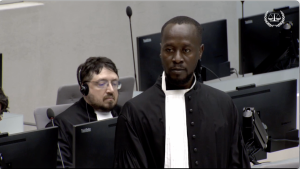
Addressing the judges on behalf of the General Coordination Committee of the IDPs and Refugee Camps in Sudan (GCC), one of the largest victims’ associations in the world representing millions of IDPs currently residing in IDP camps all over Darfur, was Abdulbasit Mohamed, a Darfuri lawyer with the Wayamo Foundation. Abdulbasit Mohamed was born in Central Darfur, near Garsila, and is a member of the Fur community that Kushayb’s forces attacked; the villages named in the judgment are where his family lived and his ancestors are buried. Under the al-Bashir regime he represented Fur clients in the courts of Khartoum, and was detained for doing so.
The GCC was formed in 2005, in the wake of Security Council Resolution 1593, to give the survivors of the Darfur war a direct voice with the international community. It represents the displaced communities of the camps across Darfur and eastern Chad, and the Trust Fund for Victims has told the Court it would play a central role in any reparations process. Earlier this year, following in-depth consultations with the GCC, Wayamo filed an amicus brief on behalf of the group.
Two requests that decide whether the order means anything
Kushayb is indigent and Sudan is at war. The Trust Fund for Victims does not currently have the tens of millions of dollars needed to satisfy the victims claims, and the Court has limited enforcement capability in Darfur today. The GCC therefore asked for what the Court alone can give, and no one can take away.
First, assigning the liability to all involved. The ICC judgment found, more than eighty times, that Kushayb committed his crimes jointly with the forces of the Government of Sudan. The GCC asked the Court to state, as it did in Ongwen, that Kushayb and his co-perpetrators are jointly and severally liable to repair the full harm. It fixes the debt at its true size, keeps it on the record, and preserves the victims’ rights before any body that may one day make the perpetrators pay: Sudan’s peace agreements, or a future claims mechanism for Darfur.
Second, preserve the land. In Darfur, land is the hawakeer, the customary holdings that tie a family to a place across generations. The killing of the sheikhs and umdahs destroyed the living registry of who held what. The GCC asked the Court to find that the Fur communities were wrongfully dispossessed and are entitled, in law, to return; to order the community-led mapping of villages and holdings so the registry can be rebuilt now; and to record, for anyone who takes that land in future, that its dispossession was criminal. The Court cannot return the land today. It can protect the claim to it.
“A finding of this Court cannot be stolen at a checkpoint,” Abdulbasit Mohamed told the judges. “It will ring true in the camps on the day it is pronounced.”
“We ask the Court to leave the victims with something tangible,” added Mikel Delagrange, Senior International Legal Advisor at the Wayamo Foundation and co-counsel for the GCC. “This Court should assign liability to not only Kushayb, but also to his co-perpetrators, the individuals making up the Government of Sudan Forces. This joint liability will make all of them, including former President Omar al-Bashir, liable for the whole debt and will give the hundreds of thousands of victims an important tool to pursue justice in other fora as well.”
“An order in this direction would signal that the Court is firmly committed to complementarity and not afraid to issue decisions that can have powerful domestic legal effect in the future.”
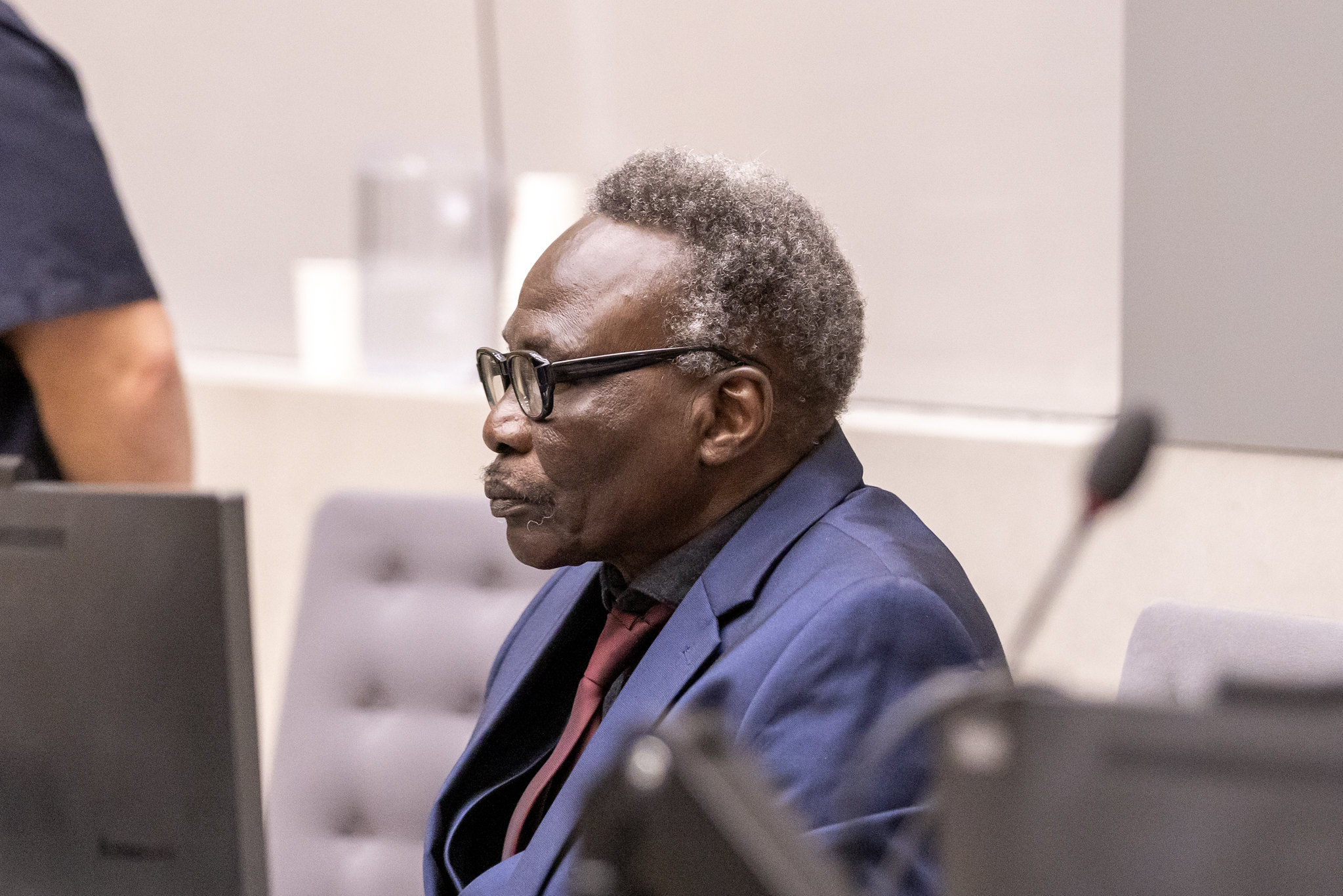 Ali Muhammad Ali Abd-Al-Rahman (“Ali Kushayb”), who was found guilty of 27 counts of crimes against humanity and war crimes which took place between August 2003 and at least April 2004 in Darfur, Sudan. Photo courtesy of International Criminal Court, Flickr.
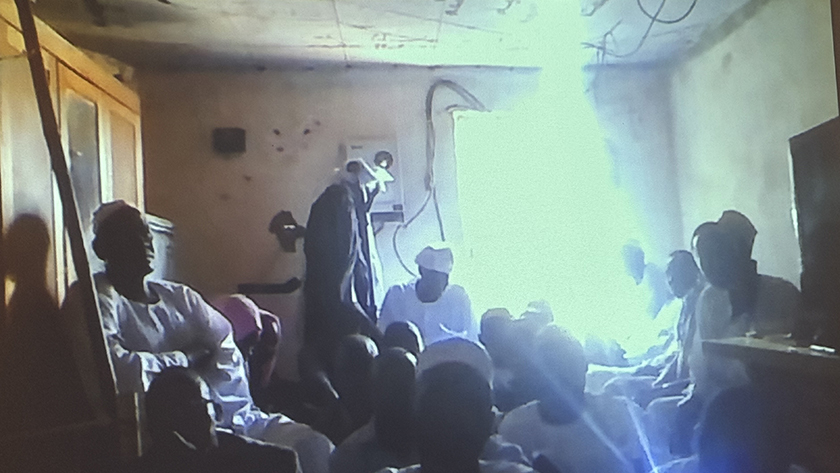
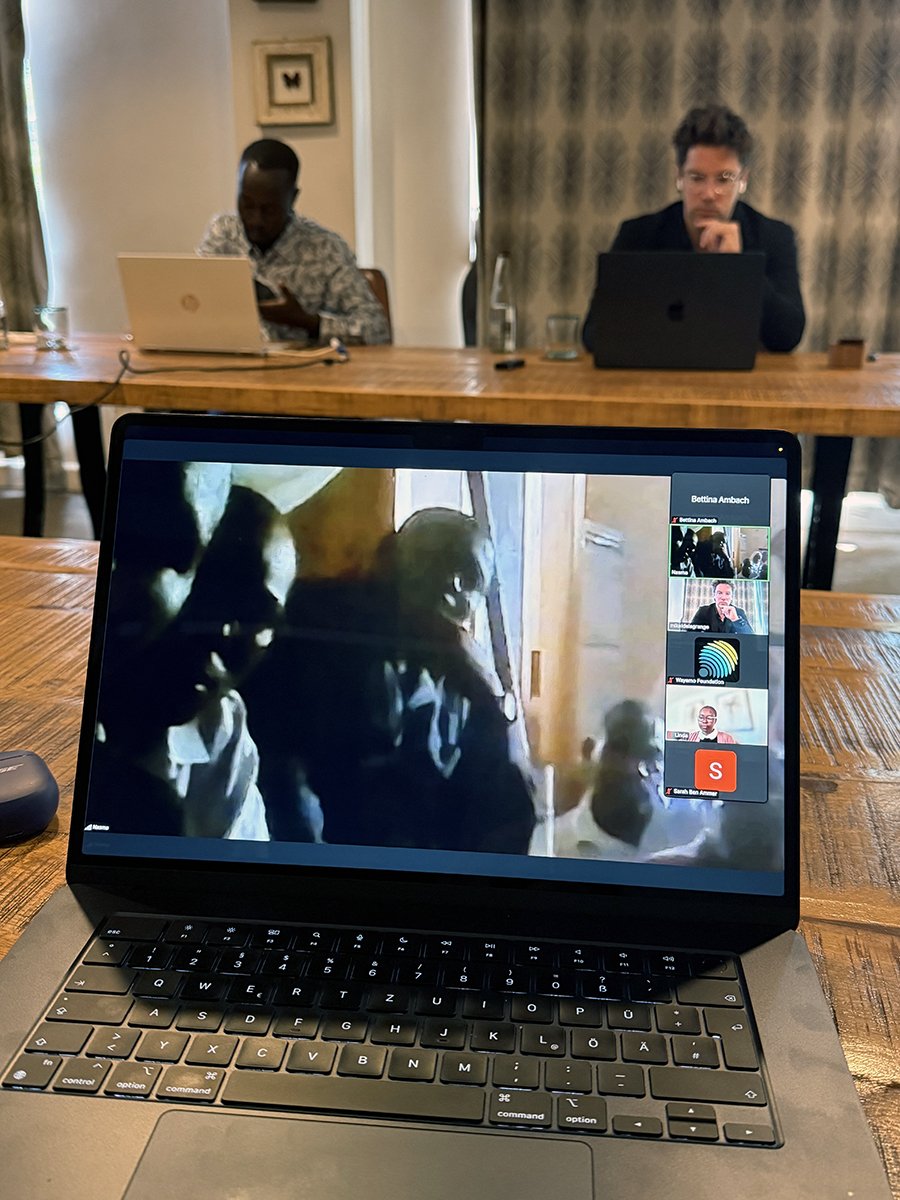 Wayamo’s Mikel Delagrange and Abdalbasit Mohamed consulting with the GCC.